|
|
 |
|
|
Charleston, SC Fall,1999 |
|
|
|
|
|
Charleston, SC Fall,1999 |
|
SHRIMPOLOGY |
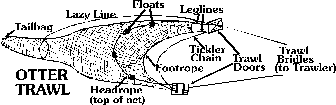
tugs on the "trawl bridles", the doors not only make a spread in the front end of the net, but also make the net dive to the bottom. That's where the shrimp are. The
"tickler chain", which is out in front of the bottom of the net (the "footrope"), tickles the shrimp up out of the mud and makes them jump into the net. If you've ever watched a shrimp trawler dragging, you've noticed that it's barely moving. That because the net is being dragged through the bottom mud, and most commercial trawlers set out two or three of these otter trawls using their outriggers.
In South Carolina, the otter trawls are not allowed inside the inlets. Trawlers have to operate offshore. (In Len Anderson
|
||
|
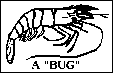
Shrimp lead an unfortunate life. Not only is everybody and their brother trying to catch them to boil, but also, the average shrimp lives for only one year. Shrimp spawn at sea, not in the creeks, coves and estuaries that most of us would think to be their birthplaces. When the female gives birth at sea, the baby shrimp are in what looks like a cloud of milk. The microscopic shrimp soon become the size of plankton (a little bigger than microscopic), and their instinctive urge is to find their way through the inlets into those creeks, coves and estuaries where they mature and become big shrimp. To do this, the plankton-size shrimp have a knack for rising to the surface when the tide is rising and the current is rushing in. Then, when the tide is falling they drop to the bottom where the outgoing current is not as strong. By taking these two steps forward and one back, they find their way into the shallow tidal waters to feed and mature. When mature, and this is usually starting in early summer, the shrimp then have to find their way back out to sea to lay eggs, fertilize them and reach their final resting place. This completes the one year cycle. The shrimp trawlers and bait casters try to catch them when they school up on their way back out to sea. Shrimp have not always been in demand like they are today. A hundred years ago, commercial fishermen hated to get shrimp stuck in their nets. The shrimp were trash, and the fishermen called them "bugs." They're still called bugs. It's no wonder why, because they look like bugs.
Whoever was the first brave soul to eat one should be recognized almost as much as Edison was for the light bulb. The same should apply to the first crab and oyster eaters. But in the early 1900's, shrimp did catch on, and the bugs soon became delicacies. The next step was to figure out the best way to catch them. At this time, motors began replacing sails on fishing boats, and a new type of net was developed in North Carolina that could be dragged behind a motor-powered boat. It was called the "otter trawl." How the name "otter came into being is a good question. Possibly, a Mr. Otter was the idea man. But the idea has stood up over the years, and the otter trawl is still used today anywhere in the world where boats trawl for shrimp. It looks like a flat funnel. (See likeness in the next column.) The narrow end of the funnel, where the catch winds up, is cinched together with a slip knot and is called the "tailbag." The "trawl doors" at the front of the net are fashioned so that when the boat |